If you’re ready to enjoy the next best thing to your real teeth, your dental implant consultation is the first step in your journey. Unfortunately, there has already been a bump on the road. Your dentist found you’ll require a bone graft if you want to get dental implants. Although you hadn’t expected the additional procedure, it’s necessary for the success of your investment. Here’s why you’ll be glad you chose to strengthen your smile with bone grafting.
How Do Dental Implants Work?
A dental implant is unlike any other treatment because it replicates both the root and crown. A titanium post is surgically placed in the jawbone to serve as a new root. By doing so, it stimulates new bone growth, causing your jaw to fuse to the post through osseointegration. The post can potentially remain in place forever to provide a stable foundation for your restoration, which is attached to the implant using an abutment.
Why Does Bone Density Matter?
The success of osseointegration relies on adequate bone density. If you’ve been missing teeth for many years, you will likely need bone grafting. Every tooth is crucial to a healthy smile. Losing even a single tooth causes your jawbone to deteriorate because it isn’t being stimulated by the root. You can lose up to 25% of your jaw’s density within just the first year of missing a tooth. As a result, you may not have enough bone to support dental implants.
Bone loss can also result from advanced gum disease. Although the infection is preventable, it’s the leading cause of tooth loss because it destroys the supporting structures of the teeth. If you’re missing teeth from the infection, you might have lost bone, too. Thankfully, bone grafting can solve the problem.
What is Bone Grafting?
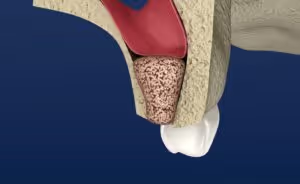
During your dental implant consultation, your dentist reviewed a CT scan of your mouth to look for any concerns that might not be visible from the surface, like bone loss. Bone grafting is a surgical procedure that strengthens weakened areas of your jaw by taking bone from another area of your body or a donor to graft on the area. Your bone will integrate with the graft over the next several weeks. After your bone has healed, your dental implant will have the sturdy framework it needs to thrive for decades.
Give Your Smile a Strong Foundation
Although a bone graft will add a few more weeks to your treatment plan, it’s time well-spent to ensure your investment lasts for decades with the proper aftercare. You’ll enjoy results that look and feel natural while having peace of mind knowing your dental implants aren’t going anywhere.
About Dr. Charles R. Fana, Jr.
Dr. Fana earned his dental degree from the University of Louisville. He continued his training at the L.D. Pankey Institute to become an expert in many complex procedures, like dental implants. If you’re ready to permanently treat your tooth loss, contact our office today to schedule your consultation for a complete smile.