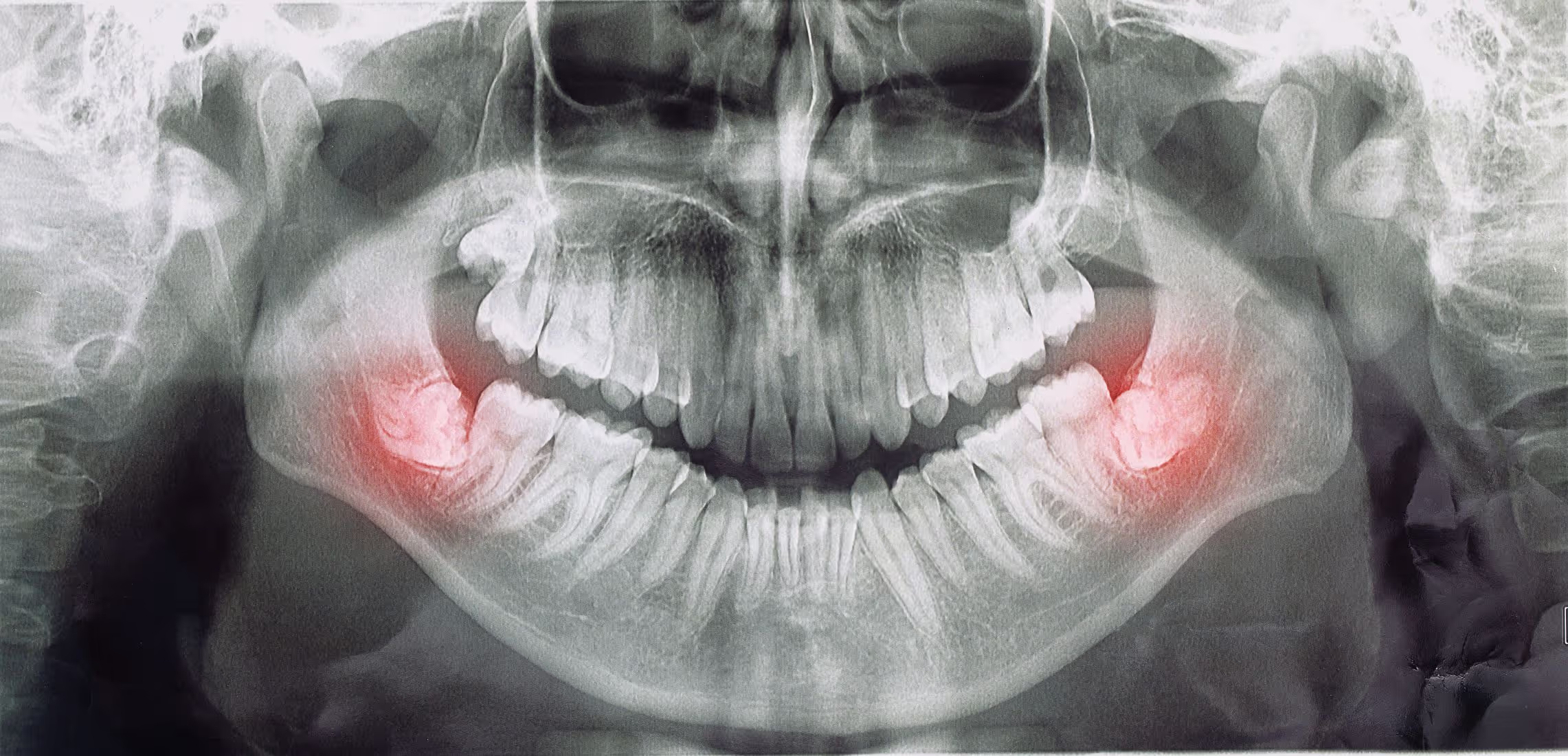
Have you recently noticed that your jaw feels tender or sore lately, and are you a young adult between the ages of 17 and 22 years old? If so, your symptoms might be due to your wisdom teeth! These last molars arrive years after your other permanent ones, so it’s believed that our ancestors developed them to replace any teeth that had been damaged or lost by the time they reach adulthood.
However, today, they’re not required for survival and tend to cause problems, so most dentists recommend removing them. Continue reading to learn 3 excellent reasons to consider having yours extracted!
Reason #1: Aches
Did you know that your jawbone continues to harden through adolescence and into adulthood? It becomes firmer as softer tissues, like cartilage, harden into mineralized bone tissue over time. That means your wisdom teeth have to shove through dense layers of material to erupt through the surface of your gums. Unfortunately, they’re infamous for causing plenty of pain during this process.
Although you may be able to find some temporary relief with over-the-counter pain meds like Tylenol or ibuprofen, in most cases, the best way to alleviate the ache permanently is to remove the problem at its source.
Reason #2: Impaction
Impaction is another common occurrence when wisdom teeth start to arrive and happens when there isn’t enough room in your jawbone for them to fit correctly. As a result, they can become trapped in your jaw at inappropriate angles or only partially cut through your gum tissues.
This dramatically increases the risk of developing swelling, inflammation, or cysts, which are small, fluid-filled sacs, around the partially erupted tooth. This causes additional irritation and infection, which, if left unaddressed, can enter your bloodstream and spread to other areas of your body.
Reason #3: Overcrowding
You might think of your pearly whites as solid, immovable mounds in your jaw, but the truth is they’re connected by muscles, ligaments, and tissues with a natural capacity for movement. This elasticity is what allows orthodontic treatments, like braces, to be successful.
However, it also means that your arches may become misaligned when your wisdom teeth erupt. Human jawbones are not as long or angular as they once were, meaning we lack the extra space that once existed to comfortably house these last molars. As a result, they frequently push neighboring teeth out of alignment, increasing the risk of damage, decay, and TMJ (temporomandibular joint) disorders.
If you’re unsure why your provider recommended wisdom tooth extraction, asking them directly can provide answers based on your unique circumstances!